Books to Get You in the Halloween Spirit

For this week’s Broke and the Bookish meme, I decided to revive an older topic and do my Top Ten Tuesday on books that get me in the Halloween spirit.

Halloween is one of my favorite holidays. I love this time of year and thoroughly enjoy planning costumes. So whether you like to scare yourself silly or are just in it for the candy, hopefully this list will have something for you.

*Links lead to it and pictures come from it: Goodreads*

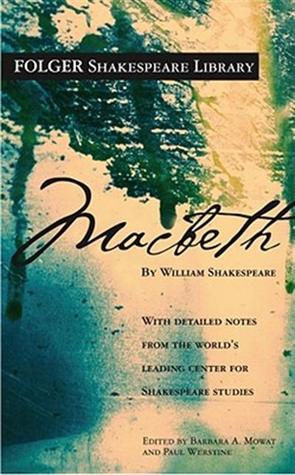
Macbeth

1. Macbeth by William Shakespeare

The original creepy witches. “Double, double toil and trouble/ Fire burn and cauldron bubble.” Plus murder, political intrigue, and insanity. Halloween sounds like a great time to brush up on The Bard.

The Monkey's Paw

2. The Monkey’s Paw by W.W. Jacobs

An eerie short story about the perils of making wishes that will create the perfect spooky atmosphere for a Halloween party. It was originally published in 1902 but don’t be afraid to break it out and read it to your youngsters if they’re looking for a good scary story.

Odd Thomas (Odd Thomas, #1)

3. Odd Thomas by Dean Koontz

Not that you couldn’t enjoy the Odd Thomas series any time of the year, but considering that originally Halloween is supposed to be when the veil between the spirit world and our world is at its thinnest, now might be a good time to read about a man who sees ghosts and solves crimes.

It's the Great Pumpkin, Charlie Brown

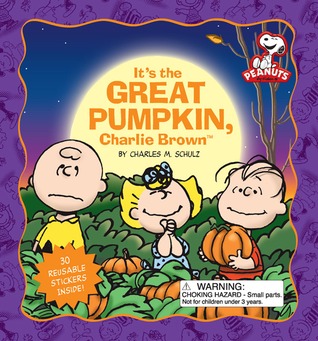
4. It’s the Great Pumpkin, Charlie Brown by Charles M Schulz

If the scary stuff isn’t your style, I suggest reading and/or watching this Peanuts classic. The story of The Great Pumpkin is one of my all time favorite Peanuts moments and always gives me a case of the warm fuzzies.

The Witches

5. The Witches by Roald Dahl

Roald Dahl is a natural choice for a children’s story with dark twists and turns. The Witches is just the right amount of scary, especially if your household has some young readers.

The Physick Book of Deliverance Dane

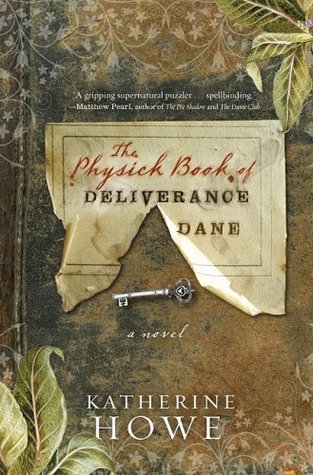
6. The Physick Book of Deliverance Dane by Katherine Howe

Another solid tale of witchcraft. This particular novel flashes back and forth between past and present day to explore the rich history of witches in New England. I got sucked into this book a few years ago and really enjoyed the mood and tone Howe so expertly conveys.

The Night Circus

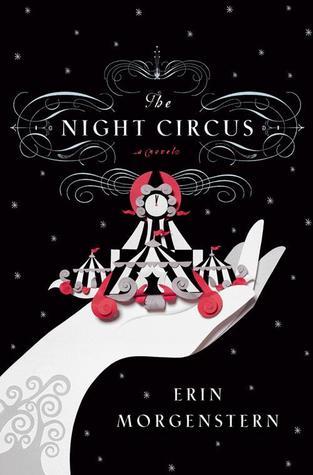
7. The Night Circus by Erin Morgenstern

I know I mentioned this in last week’s TTT, but I think this book has a strong sense of atmosphere that can only be enhanced by cool autumn nights and a hot beverage while reading.

The Shadow of the Wind (The Cemetery of Forgotten Books,  #1)

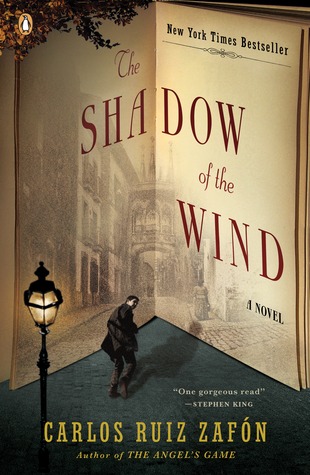
8. The Shadow of the Wind by Carlos Ruiz Zafon

I finished this book within the last year and was captivated by Zafon’s magical realism. The winding streets of Barcelona and the mysterious, supernatural feel of the book would make for a great Halloween read.

Narcissus in Chains (Anita Blake, Vampire Hunter, #10)

9. Narcissus in Chains by Laurell K. Hamilton

If you’re not reading the Anita Blake, Vampire Hunter series then you should absolutely start from the beginning (which is the book Guilty Pleasures). But if you’re already involved in the series, might I suggest re-reading Narcissus in Chains. It’s a novel that focuses on the shifting part of Hamilton’s world and it’s as dark and compelling as ever.

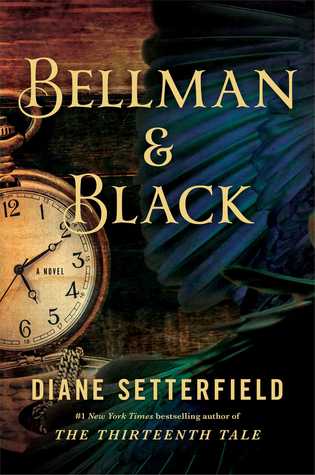
Bellman & Black

10. Bellman & Black by Diane Setterfield

I’m not quite finished with this one yet, but I can say it has been a great October read. Setterfield has a way of telling stories that are not explicitly creepy but evoke elements of the macabre and unusual. Definitely worth the read!

I hope these spooky-themed reads get you in the right state of mind for Halloween.

Thanks for popping in!

Book Before Movie? Or Movie Before Book?

Most lovers of literature have a firm stance on adaptations: read the book before seeing the movie.

There are many justifiable (and accurate) reasons for this philosophy:

A) 99.9% of the time the book is better than the movie in detail, plot, and character development. Hardcore fact of life.

B) Most readers want to imagine the world and visualize the characters their own way without Hollywood interfering and (often) whitewashing.

C) The joy and elation that being able to discuss and prove point A provides.

The reaction every bibliophile has when they’ve been betrayed.

I’m sure there are other reasons for readers out there (and I’d love to hear them in the comments below) but these three seem to form the trifecta of reader angst.

And I fully understand the pain. My go-to example is The Goblet of Fire (2005). Goblet of Fire is one of my favorite Harry Potter books. The rich details of the tournament itself, the expansion upon the wizarding world to include other schools, the Quidditch Cup, and of course the dramatic final chapters where Voldermort does indeed return. Such a pivotal book in the series and I’ve always felt the movie grossly mishandled the original material.

Every reader out there has one of these movies that completely botched their favorite books. We as readers tell our tales of woe as if they were harrowing events that we have not fully recovered from.

Just a tiny example: In the book, the first event of the Tri-Wizard Cup has the students facing off against dragons in order to gain tournament points and collect the valuable clue for the next round, which is a golden egg. Harry pulls off this amazing dive on his broom from a great height, swooping down and pulling out of the dive at the last possible moment, garnering serious points and proving himself equal to if not better than Viktor Krum, a fellow competitor and professional Seeker. It’s a riveting scene in the book.

In the movie, the dragon breaks free of its chains and chases Harry all around Hogwarts, destroying many a turret and collapsing a few roofs, before Harry manages to outfly the dragon and gain the egg. There is so much wrong with this scene in the movie: the whole point of Harry diving and swooping was to gain the egg quickly for points and for the parallel between Krum. You get none of that in the movie. You get some CGI porn that shows how cool the animators thought their dragon looked. Never mind that it should have created story problems like why is no one trying to save this kid from a dragon on the loose? or how does Hogwarts handle their severely busted castle while they have guests no less? Nope, movie doesn’t even hint at these problems that to my mind are quite serious.

That, my friends, is a small, contained rant about one scene translation from book to movie. I have more where that came from.

But you get my point. The intense feeling of violation and betrayal from a bad adaptation lingers and spoils any enjoyment of what might otherwise be a fun movie.

After many years of horrifying disappointment I have often subscribed to a theory that might be somewhat controversial: go see the movie before reading the book. Hear me out.

A) I’m fully aware that the book will be better, so the movie gives me an inkling whether or not I’d like to further explore more fertile territory.

B) I’d like to think that my imagination is a more powerful beast than the movie mill that is Hollywood. Ergo, though I sometimes visualize a character as they are cast, if I think the person doesn’t fit with the book description, I can still imagine the character how I see fit.

C) I manage to lose the righteous indignation of having read the book and can enjoy the movie as a separate entity. When I read the book later, I can heartily debate the differences but I am no longer angry. My appreciation for both mediums is left in tact.

D) Though there are certainly spoilers in the movie, many more twists and turns await me in the book. The higher level of detail helps retain the level of suspense. Plus the way books are being adapted these days, so many drastic changes are made there is no guarantee that the movie you’ve seen accurately reflects the book’s ending (which, again, angst). Case in point: The Giver (2014) and Fight Club (1999).

This is how I manage not to have an aneurysm at the theater. I swear I’ve been a happier creature since adopting this method. Not convinced? OK let’s try some anecdotal evidence.

Prepare yourselves: I saw Pride and Prejudice before I read the book. And it was the Keira Knightly, Matthew Macfayden 2005 version, not the Colin Firth 1995 mini-series. And I loved it. I was in high school when the movie came out and I saw it with a group of girlfriends. I went through the whole range of emotions. Loathing Mr. Darcy for his pretensions and superiority while rooting for Lizzy’s wit and determination. Then gradually and somewhat unwillingly falling in love with Mr. Darcy and wanting to scream at Lizzy to just go for it already.

Whatever your feelings on that particular rendition of Pride and Prejudice, that movie primed me for reading the book in a way that teenage-me had not been ready for. If I haven’t mentioned it before, I have a strong reluctance to read anything that is over-hyped or books I “should” read. That movie said, “yes, it’s required reading but you’re going to love it.” And I fell so deeply in love with Austen’s book. The movie didn’t ruin it. It gave me the nudge I needed.

I promise all of these examples won’t be Keira Knightly based, but this film bears mentioning for the sake of my argument and just because I love it. Atonement (2007). I saw the movie with a group of friends who were all sighing over Ian McEwan as a writer and I thought, how good can this guy be? The movie itself blew me away. Beautiful, emotionally trying, and well acted. Atonement the movie made me need to read Atonement the book.

And yes, the book is better. That’s not shocking. But knowing the big secret from the film only made the rest of the book more poignant for me, so seeing the movie first made the read a more provocative one. I cried just as hard at the conclusion of the book as I did at the film. It also bears mentioning that Atonement is one of the most stunningly realized adaptations I have ever seen. Now I’m the one sighing over Ian McEwan.

For my final proof, I submit George R. R. Martin. I’m a big “Game of Thrones” fan. Both book and tv show, and I’ll tell you now that I’m deliberately behind on reading the books because I cannot stand being ahead of the TV series. Part of the logic behind this is that Martin’s giant books cannot be written fast enough to keep abreast of the show for long. The other half of the logic here is that when the show inevitably makes some stylistic changes, I have a tantrum to rival Prince Joffrey.

“Game of Thrones” is an undeniable behemoth in the world of television right now. The production values are great, the acting is stellar, and the twists are about as good/bad as a well-timed knife to the back, of which there are many in the series. I love the show. But I have never hated it so much as when they made certain deviations in season three. I got mad because I had read A Storm of Swords (book three) just before watching season three and could not enjoy the bulk of that season because I was too busy picking it apart to enjoy it.

That’s the crux of the problem of reading the book first: I’m looking for the movie or show to fail. I may say I’m excited about it and make a few jokes about how I hope they don’t screw it up, but I will always nitpick the movie to death if I’ve read the book first.

I love both mediums. Movies and books have been my safe havens and welcome escapes since childhood. They’re both good for different reasons, I know that on an intellectual level. But when it comes to the emotional level of knee-jerk reactions I had better have seen the movie first or the litany of comparisons to the book will tear the film to shreds.

Maybe a few of you will be convinced to try watching the movie first. I know, it feels weird, don’t panic! But if not, I understand. Some wounds are too deep to traverse and movies can cut just as painfully as paper pages, though in different ways.

Do you dare to watch the movie first? Or is that a hell no scenario?

Thanks for popping in!
Bookish Wanderlust

For this week’s Broke and the Bookish weekly meme we’re doing a little bit of imaginary traveling. This week’s Top Ten Tuesday is about the ten places books have made you want to visit.

At first, I was determined to list only places I could actually achieve as a sort of bookish bucket list, but then I’d be missing some of my favorite fictional locales. So here we go on a whirlwind tour of some fantastical, fictional places that I would visit if I could.

1. The Magical World of Harry Potter from J.K. Rowling’s Harry Potter series

Image respectfully borrowed from the Harry Potter wiki

Honestly, this is a no-brainer. In my touristy little heart I would love to go on a school tour of the wizarding world featuring Hogwarts, Durmstrang, and Beauxbatons. The closest I’ll get in real life is the Warner Brothers studio tour and Universal’s resort, so those real-life places are definitely on the ole’ bucket list.

2.Tortall from the Song of the Lioness series by Tamora Pierce

Respectfully borrowed from the Tamora Peirce wiki.

Tortall just seems like a fascinating place: it has wintry woods and a desert right next to sea ports and sprawling cities. I’m extremely intrigued.

3. Bon Temps from the Sookie Stackhouse Novels by Charlene Harris

Respectfully borrowed from the True Blood wiki.

It’s such a small town, but a lot of things seem to happen here. I’d like to have a beer at Merlotte’s and shop at Tara Togs. Maybe drive up to Shreveport and visit Fangtasia. Sounds like a fun vacay to me!

4. Amsterdam a la John Green’s The Fault in Our Stars 

Respectfully borrowed from worldhotels.com

Green did such an amazing job of painting Amsterdam as more than the red light district and pot brownies (which is how it’s usually depicted). Hazel and Augustus’ adventures in Amsterdam made me want to visit the city in a way no other novel has before. Another one for the real life bucket list.

5. Middle Earth from Tolkien’s Lord of the Rings (post ring drama)

Respectfully borrowed from bonanza.com

I want to ride horses in Rohan and visit the white tree in Gondor and see the remaining elves in Rivendale. And I want to take a walking tour of Hobbiton, which is sort of an actual dream to visit the film set in New Zealand. But Tolkien does a phenomenal job of world building so it’s easy to picture yourself.

6. New Orleans á la writers like Sherrilyn Kenyon and Anne Rice

Respectfully borrowed from nompco.com

Nearly any writer who has tackled the paranormal has frolicked in New Orleans. I’ve never been and would love to visit the city someday. I need beignets and good jazz in my life. And maybe some ghost tours.

7. The Circus of the Damned from the Anita Blake series by Laurell K. Hamilton

Respectfully borrowed from marvel.com.

If I could guarantee safe passage from Jean Claude’s Circus of the Damned, then I would explore that place from top to bottom. But getting out unharmed would be a great party trick.

8. The Night Circus from The Night Circus by Erin Morgenstern

Respectfully borrowed from usatoday.com.

Morgenstern creates a beautiful world of wonder in black and white with pops of red. Knowing that each tent was physical love letter between Ceila and Marco would make everything seem more magical.

9. The Tudor court as depicted by Phillipa Gregory in The Other Boleyn Girl

Respectfully borrowed from telegraph.co.uk.

Not that I’d actually like long-term living without the wonders of indoor plumbing and modern medicine, but a wee visit to  Gregory’s vision of the Tudor court would be fun. The Other Boleyn Girl is one of my favorite books so it would be amazing to walk the halls where Mary walked.

10. Troy (pre-sacking) from Sarah Franklin’s Daughter of Troy

Respectfully borrowed from virtualspacetheory.com

Now, I’m getting really picky since I’m specifying pre-sacking. But if you’re going to visit one of the most beautiful and wealthiest strongholds of the ancient world, don’t you want to see it in all it’s glory? I really enjoyed Franklin’s book and her depiction of society in ancient Greece, so that’s the version I’d like to visit.

There you go; my wishful thinking travel locales from favorite books. Some of them are attainable, some significantly impossible, but maybe I’ll make it to the real-life locations someday.

Thanks for popping in!

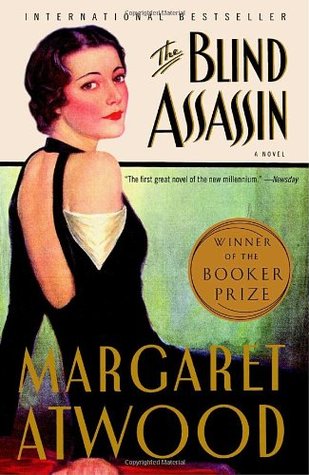
The Blind Assassin

Another library find, Margaret Atwood’s 2001 Booker Prize winner, The Blind Assassin. What initially drew me to this book was its cover. The vintage appeal, the oval face and softly muted colors of the classic prints I have so admired in antique stores since childhood. Then the all important flip to the first page which reads, “Ten days after the war ended, my sister Laura drove a car off a bridge.” Consider me sold.

The Blind Assassin

Image respectfully borrowed from Goodreads.

The Bind Assassin is largely told from the perspective of Iris Chase, now in her eighties, as she recounts her past with her sister, Laura, who very much dominates her thoughts. The once great Chase fortune has been diminished and what remains is Laura’s legacy after Iris posthumously published Laura’s writings. The mystery and scandal around the Chase family pulls the reader forward through the twists and turns of the story.

I also thoroughly enjoyed the setting of the novel, Port Ticonderoga, Canada, because the location seemed so innocuous for all the mystery swirling around the Chase family. The setting is vividly brought to life in both the past and present, and the societal divide between the previous century and the new millennium as described by Iris is fascinating.

The novel is broken up into fifteen parts, each containing an unspecified number of chapters. Each part focuses on a different aspect of the story and they alternate one after the other. For example, Iris’ present and her flashbacks would be in one section and Laura’s novel and news clippings from the past would be in another section.

One of the best parts of this book is that you get the feeling of being a detective. Which details are relevant? Which sister is telling the truth? Atwood teases her readers with little clues that are expertly wrought. As fact and fiction blur you cannot help but get caught up in the mystery.

Even when you feel you have pinned down a detail or plot point, Atwood is a compelling enough writer to make you believe you haven’t fully figured it out. That small nugget of ‘what if’ propels you through The Blind Assassin.

Atwood truly is an amazing storyteller whose poetic musings make any of her novels more impactful. One of my favorite lines was a random bit that felt like an incantation, “I was sand, I was snow–written on, rewritten, smoothed over.” Gives me chills. The whole novel is littered with this gorgeous debris of language that made me pause to contemplate a sentence. As a reader, that’s one of the most powerful sensations–the urge to stop and contemplate rather than forge ahead.

My one complaint, if any, is that at times the story felt a bit slow. Especially in the beginning, when Iris flashes back to the early points of childhood. But as you churn through the pages, you get the sense that every detail is connected, which further builds the tension.

One of my favorite novels of all time is John Irving’s A Prayer For Owen Meany. In many ways I think Irving and Atwood’s novels are kindred spirits. Both have a narrator whose life is defined by a small, strange family member or friend that they feel compelled to help. These narrators are the survivors who must write down their trials. The subjects–Owen and Laura–are both lit from within by their conceptions of religion, and no one truly understands them until it is too late. These are large-scale comparisons but if you are a fan of A Prayer For Owen Meany, I would highly recommend Atwood’s The Blind Assassin. And vice versa if you haven’t read the John Irving novel.

I find myself being deliberately vague with this review when describing the plot because I do not want to spoil the mystery in any way. I will say that a discerning reader will quickly pick up on the subtext Atwood weaves throughout The Blind Assassin, and the ending was slightly disappointing because I thought Atwood would round things off more. Still a great read though.

I’d give Margaret Atwood’s The Blind Assassin 4 book bubbles.

Thanks for popping in!

A Night’s Hard Reading

As you might have guessed, I love to read. But that doesn’t mean that every book is an easy read. This week’s Broke and the Bookish Top Ten Tuesday post is about the books that were hard to get through.

All of the books on this list were books I finished reading, because I could make a whole other list of books that were too terrible to complete.

There are a variety of things that could make a book hard to read, so I made a general list instead of a specific one i.e. it was hard to read because of length or bad writing. And hard to read does not always mean that the book in question was bad. My first book on this list is a great case-in-point, so let’s get started.

*Pictures and links from Goodreads*

The Year of Magical Thinking

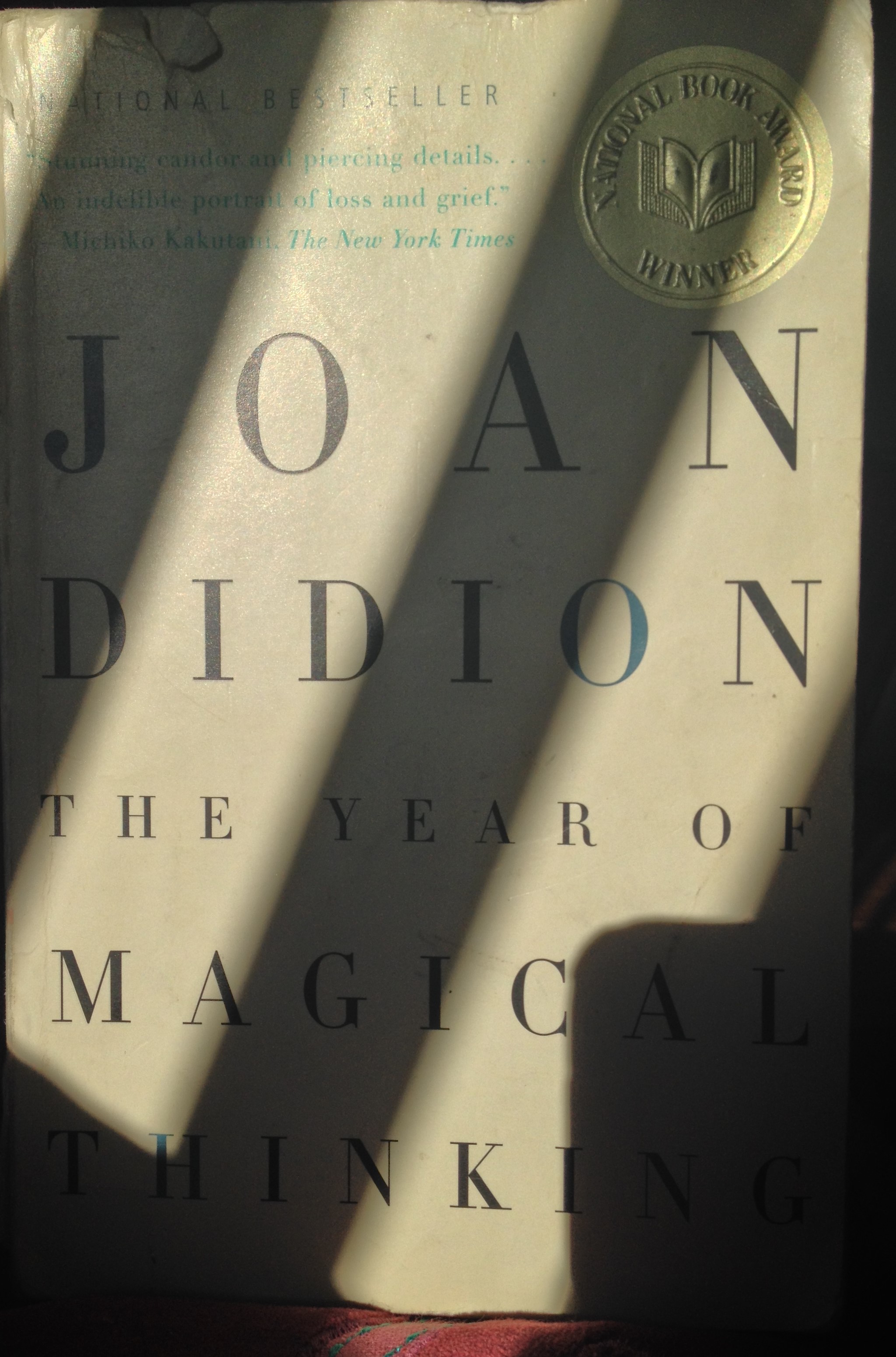
1. The Year of Magical Thinking by Joan Didion

This is one of the hardest books I have read in recent memory. Not because of bad writing. Not because of length or complexity. No, this book was hard to read because it forced me to face my own grief. And that is challenging. For my full review, click here. Didion is an amazing writer, and while this book was hard for me, it was undeniably worth the read.

The American Heiress

2. The American Heiress by Daisy Goodwin

Now, this book was hard to read for technical reasons. The main character, Cora Cash, was so vapid that she deflected any sympathy I was ready to give. Such a difficult character to connect with. I wanted to throw my book across the room more than once.

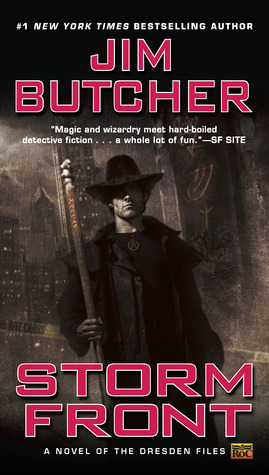
Storm Front (The Dresden Files #1)

3. Storm Front by Jim Butcher

There’s nothing I love more than deep-rooted misogyny draped in the veil of chivalry. Harry Dresden wants to see himself as a noble, chivalrous man, yet at the end of the day cannot help but see women only as pretty things to be saved, pitied, or screwed. So, yes, I found this book to be challenging for all the wrong (or right?) reasons.

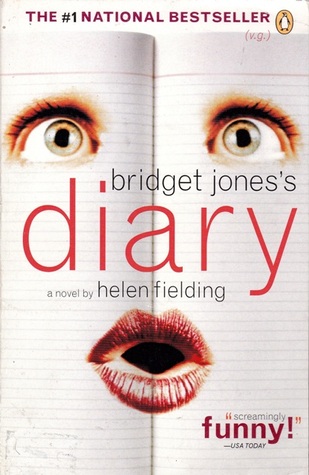
Bridget Jones's Diary (Bridget Jones, #1)

4. Bridget Jones’s Diary by Helen Fielding

Just one of my problems is the punctuation on Jones’s. I know this is a book beloved by many people, but I thought this was a painful read. A character repeatedly being embarrassed is not a fun experience for me. And the obsessive weight watching and counting of cigarettes made me wince instead of encouraging laughter.

The Three Musketeers

5. The Three Musketeers by Alexandre Dumas

I am still slogging through this book, but I am determined to finish the damn thing. This book is a hard read for an interesting set of reasons. A) I’m stubborn and thought reading the unabridged text would be a lark and B) I may have seen too many Musketeer movies. Since I am so familiar with the story courtesy of film, the unabridged text feels even more lengthy. It’s fabulously well written and is witty and full of action. But’s it’s been a hard read nevertheless.

The Metamorphosis

6. Metamorphosis by Franz Kafka

Some books you just cannot get past the content even if it is well written. This is a story about a man who becomes a huge cockroach. I can’t. I just can’t. Even thinking about the man-bug thing makes me want to heave. I finished it because it was required reading in high school, but it scarred me for life.

Wicked: The Life and Times of the Wicked Witch of the West (The Wicked Years #1)

7. Wicked by Gregory MaGuire

Again, I realize I’m one of the few here, but I struggled with this book. I think a large part of it is that I wanted to like the book so badly that my expectations were sky-high. I read the book way before seeing the musical, so the stage show was not a factor. A ton of my friends were reading MaGuire in high school and were singing his praises. So this book was a hard and disappointing read because of author hype.

The Sound and the Fury

8. The Sound and the Fury by William Faulkner

Another book that I actually enjoyed finding its way onto the hard list. This Faulkner classic lands itself of this list because of the POV of Benjy Compton, a character with an unspecified mental health issue whose chapters are written with past and present blended together. I read this book in high school as well and if it were not for an enterprising former student who had colored the sections in primary colors and left me a key in my copy of the book, I would have been in big trouble while reading The Sound and the Fury.

Peace Like a River

9. Peace Like a River by Leif Enger

There is a giant blank spot in my brain when it comes to this book. I have a vague sense of anger and frustration left behind, which leads me to believe that I have repressed the reading experience altogether. I do remember that it took me forever to read because I was not enjoying myself.

Walden: Or, Life in the Woods

10. Walden by Henry David Thoreau

I read this book for the first time in high school and I struggled with it because of my own vanity. I felt attacked by Thoreau’s dismissal of clothing and other superficial elements of society, and so I clammed up and made this essay hard to read. I didn’t want to be told that I was a bad person because I cared about the way I dressed. As I’ve gotten older, I realize that is not entirely Thoreau’s point, but there are certainly elements of judgement in there for people who think about their image too much. I’ve reread it since and have found plenty to connect with, but I will always remember the difficulty of that first read as a fifteen year old.

Clearly, books can be hard to read for many different reasons. Which books have kept you on the struggle bus?

Thanks for popping in!

Book Review: The Year of Magical Thinking

I’ve always wanted to read some Joan Didion. Her name seemed to come up often in intellectual circles as this high standard for women writers. Me being me, I wanted to know what all the fuss was about.

Artsy cover shot.

Artsy cover shot.

Every ounce of praise for Didion’s writing is deserved.

I picked up a battered copy of The Year of Magical Thinking at my local library on a whim. It was there. I had the inclination to read. This is how literary love affairs start.

The Year of Magical Thinking is a memoir told in a reconstructed stream of consciousness about the emotional trials Didion faced in the year after her husband, author John Dunne, died suddenly at the dinner table. Throughout the year Didion also finds herself facing the potential of her daughter’s death through illness and the slow dissolution of her denial.

Heavy stuff.  Yet without knowing it, I picked up the Didion book that I most needed to read.

Need is such a funny thing in the context of grief, because “need” loses all logic. Didion expertly explores this chasm, this limbo where the living must continue on when a loved one has passed. I needed to read this book because in January of 2013, my father died, and I have spent so much time closing myself off to that reality.

I was set to board a plane for Sundance for a class when I was woken by a banging on my door at 4 AM. It was my great-uncle, who told me that I needed to call my Grandmother. My father has been admitted to the hospital a few days before, his fever and pain likely symptomatic of his kidney stones. He was also a type two diabetic with kidney failure, but he had texted me to tell me that he was 100% OK and not to worry. He said today was not THE day.

But when someone tells you to call family at four in the morning, the news is never good.

I knew before my grandmother picked up what she would say but the news of my father’s death still felt like a ripping. He had a stroke, suddenly in the night, after being told the previous day that he was making a strong recovery. In crisis, sometimes you know exactly how many minutes you have before you fall apart. I knew I had five. I used those five minutes to call my professor and my boss to tell them I would not be making it to Sundance. Then I curled up in a ball on my tile floor and screamed and cried.

Didion points out that we often use the word “suddenly” when talking about death. Her husband suddenly died at the dinner table. My father suddenly had a stroke. She quite honestly, if brutally, points out that there is often nothing sudden about these sorts of events. Her husband has known about his heart problems for twenty-plus years. My father had been a diabetic since he was eighteen, and his kidneys had begun to fail when I was in high school. The use of “suddenly” is a blanket we, the survivors, wrap around ourselves because we wanted to believe all was well.

Over the years, I’ve learned that my preferred method with grief of any kind is a cultivated numbness. A bottling away of pain and a good, quiet presentation of a happy face. Reading The Year of Magical Thinking and writing this post have been breakthroughs of sorts into that cultivated numbness. It has been roughly a year and half. I am still grieving. And that is OK.

My father wasn’t perfect, nor was our relationship, but perfection has no place in death. In the past year and a half I have often felt haunted by my father. Not in the literal ghost sense, but in the sense of echoing memories. Every comic book movie, every mention of military history, every surviving trinket holds more weight because these were things he loved and his love of these things was passed on to me.

Things and places haunt us as readily as the idea of people. Joan Didion’s prose is in itself haunting and flows effortlessly from the factual to the poetic. This is a woman who has taken comfort in research and knowledge: she writes from the intersection  where information ceases to be a balm and grief demands its due.

She is often startled by objects and their inherent meaning. Woven throughout each memory and interaction is the familiar, surreal desire that perhaps John will return. As if he were merely lost instead of a loss.

Didion’s use of repetition carries an ethereal element and a sense of numbness that resonated with me.  Lines of verse intermingle with memories and medical definitions that give the memoir a dream-like quality. Here was someone that understood.

There are certain books that should be doled out at various moments in a person’s life. Because some books need to be read. For me, I believe girls should be issued a copy of He’s Just Not That Into You by Greg Behrendt when they hit junior high (gentlemen, you’ll have to let me know if there is a male equivalent). And now I believe The Year of Magical Thinking ought to be delivered, wrapped  in plain brown paper, when a loved one has died with instructions not to read it until at least a year has passed.

Because sometimes you need that year to be in denial, to grieve, to mourn, or whatever it is that you do in order to gain perspective.

Any one punctured by grief will find a kind of catharsis or at least a kindred spirit in Didion. As you read it your own grief, your own stories will well up so that The Year of Magical Thinking becomes as much your story as it is Didion’s. To me, that’s the truly magical part of this piece.

It’s a short book at 227 pages, but it took me about two weeks to finish because I often needed to put it down and walk away. This book will hurt. But it helps.

I would highly recommend The Year of Magical Thinking to anyone who has struggled with loss. I give it 3.5 book bubbles.

Thank you for listening.

My Fall TBR List

Happy first day of autumn! Or by the time this post gets published it will be the second day of autumn! Woo!
In the spirit of fall, here are my Top Ten To-Be-Read Books for Fall courtesy of the Broke and the Bookish’s weekly Top Ten Tuesday meme. Let’s see what I can only hope to complete this fall!

*All links lead to Goodreads and pictures are borrowed from that site as well*

The Psycho Ex Game: A Novel

1. The Psycho Ex Game by Merrill Markoe and Andy Prieboy

I found this at my library, so this is a guaranteed read on my TBR because it will eventually be due. Two successful singles in the entertainment business strike up a friendship that evolves through email into a competition over who has the most psychotic ex. As they connect, they find themselves wondering who would be the crazy one if they were to take their friendship to the next level. I love novels that use emails or letters, so this sounds like fun.

Why Girls Are Weird

2. Why Girls are Weird by Pamela Ribon

Another library find. Bored librarian, Anna, starts fabricating stories about a fabulous life on her blog and gains serious followers, including a guy who would be interested in Anna if she didn’t already have a (fake) boyfriend. Her blogging life and her real life are set to collide, which will force Anna to figure out who she wants to be. The premise interests me for obvious reasons.

Nightmares!

3. Nightmares! by Jason Segel and Kirsten Miller

Little bit of a life brag: my roommates and I went to a Barnes & Noble this weekend to meet Jason Segel and get our books signed. This is a middle-grade level book but it looks like a lot of fun and I’m curious to see what Segel and Miller do with their premise of what happens when your nightmares start slipping into reality. It’s also supposed to be a trilogy, so that could be intriguing as well. P.S. Jason Segel is also a really nice guy in real life.

Prototype: A Novel

4. Prototype by M.D. Waters

I recently read the first part of this two book series, Archetype (click here for review). I really just want to know what happens to Emma Wade. And these covers are so freaking cool!

Bellman & Black

5. Bellman & Black by Diane Setterfield

The lovely Lauren at Books, Tea & Me suggested that we read this book together since we’d both like to read more from Diane Setterfield. Lauren, I hope you were serious, because I have put a hold on this at the library and am planning to dive in when my library stack thins down a bit in the coming weeks. This book looks like an interesting take on the business of death, but that’s an assumption based on the mysterious back jacket. We shall see.

The Happiness Project: Or Why I Spent a Year Trying to Sing in the Morning, Clean My Closets, Fight Right, Read Aristotle, and Generally Have More Fun

6. The Happiness Project by Gretchen Rubin

I’ve been making a concentrated effort over the last year to read more non-fiction. Sometimes the phrase non-fiction immediately causes eyes to glaze over and shudders of boredom to rack the spines of readers. But I’m finding that this is largely unnecessary. Good non-fiction is out there, people! And it has the same wonderful, life changing magic of good fiction. I’m hoping The Happiness Project is one of the good ones.

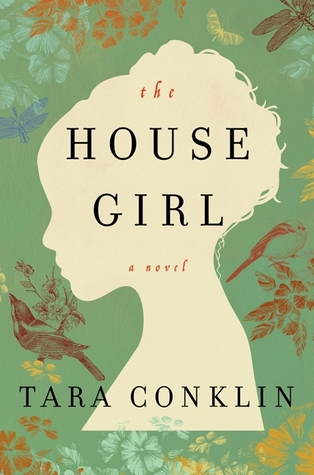
The House Girl

7. The House Girl by Tara Conklin

I have this book on my Kindle right now just waiting for me to open and enjoy. One of last year’s literary hits, I just never got around to reading. So I’m hoping to play a bit of catch-up this fall. I also enjoy books that switch between connected narratives in the past and present, so this sounds like my kind of book.

The Rosie Project (Don Tillman #1)

8. The Rosie Project by Graeme Simsion

Another book that is currently awaiting my leisure on my Kindle. I’ve heard/seen a lot of love for this book out there in the blogoshpere so I’m a little afraid of falling prey to the raging hype monster.

The Notebook (The Notebook, #1)

9. The Notebook by Nicholos Sparks

This book has been on my TBR list for so freaking long. I just need to bite the bullet and read about Allie and Noah. I have no idea why it has taken me this long. Perhaps some perverse belief that I don’t want the book to interfere with my love of the movie, which is a very rare thought process for a book lover. But I am committing here and now to reading this book before winter.

Still Writing: The Perils and Pleasures of a Creative Life

10. Still Writing: the Perils and Pleasures of a Creative Life by Dani Shapiro

My friend and roommate, Marissa, has loaned this book to me because she loves it and thinks it would resonate with me. So I will be reading this book this fall because A) I hope she is right B) book enthusiasts recommendations should be taken seriously and C) I do not want to be one of those terrible friends that accepts a physical book to read and never cracks the damn thing open and hoards it in their room for months. The struggle is real.

Well there you have it! My fall TBR list for 2014. Let’s see how many of these I can actually knock off!

Have you read any of these (hopefully) wonderful books?

One Book is Never Enough

Greetings! This week’s Broke and the Bookish Top Ten Tuesday post is all about the authors whom you’ve read one book from but that you NEED to read more of. Trust me, that was the least tangled way of explaining this week’s topic that I tried.

But we all have these authors that we LOVED a book from but just haven’t gotten around to sampling their other work. Some of these I’m actually quite abashed to have on this list because these authors have written some of my favorite books. So in no particular order here are the authors I need to show more love to…

*Links lead to author’s page on Goodreads and the photos were politely borrowed from that site as well*

1. Ian McEawn

Atonement is one of my favorite books. It is also one of the most stunning book-to-film adaptations I have ever seen. I don’t know why I haven’t gobbled more of his lyrical prose.

Next Attempt: Sweet Tooth


2. Emily Giffin

I received Giffin’s latest novel, The One & Only in my very first PopSugar Must Have box and fell madly in love with that book. It was the perfect amount of romance in my chick lit and I loved how the story revolved around college football. I never would have picked that novel up in the store and can’t thank PopSugar enough. I wish they’d send me more books.

Next Attempt: Something Borrowed. 


3. John Green

I am late to the John Green party, but not as late as I usually am with book trends, so that’s a plus. I enjoyed The Fault in Our Stars but also fell prey to the raging hype monster and didn’t love it as much as I expected to. Which is why I’d like to read more Green so that I can get a better sense of his style.

Next Attempt: An Abundance of Katherines


4. Chuck Klosterman

One of the best non-fiction culture writers of our generation and I’ve only read one of his books. I truly enjoyed I Wear the Black Hat: Grappling With Villains. Klosterman is a writer who rambles and will convince you that every step off the path was worthwhile. I’m also a fan of his prolific use of semi-colons. So I’d like to read more.

Next Attempt: Sex, Drugs, and Cocoa Puffs: A Low Culture Manifesto.


5. Michael Crichton

There is a good reason why this man’s books get turned into movies with regularity. Crichton has a very cinematic style, which appeals to me as a reader because I tend to picture any book I read as a movie projecting inside my imagination. Reading Jurassic Park after years of only knowing the movie was such a great experience. I like both stories independently of each other and that is rare for me.

Next Attempt: The Lost World.


6. Rainbow Rowell

I picked up Rowell’s Attachments as an e-book this spring, which is highly unusual because I do not often use my Kindle. Charming, quick little read that had me curious about Rowell’s other novels. And the book bloggers just adore her, so I’d better give her a second go.

Next Attempt: Fangirl.


7. Nick Hornby

I don’t know what I expected Mr. Hornby to look like but this photo wasn’t it. One of my best friends in college, Autumn, adores Nick Hornby and had been trying to get me to read his work for years. I finally read About a Boy last year and enjoyed it, so now I have to keep going!

Next Attempt: High Fidelity.


8. John Irving

A Prayer For Owen Meany is one of my favorite books. Hands down. And it has been that way since high school. I’m certain I have purchased other Irving books out of the intense love I have for that one novel, but I have yet to crack open these other books. Maybe out of fear that they won’t be as magnificent. I don’t know.

Next Attempt: The World According to Garp.


9. Alice Sebold

Way back when I first started doing TTT posts, I believe Alice Sebold made it to my authors I’d love to meet list. I was actually lucky enough to meet her and get my copy of The Lovely Bones signed. Nearly lost me mind over that one because The Lovely Bones was a book that crawled underneath my skin and lingered. Yes, that is an accurate if odd description of how it felt to read that book. I was in the seventh grade when I read the story of Susie Salmon and I still adore this book. Must read more.

Next Attempt: The Almost Moon.


10. Chuck Palahniuk

I’ve read Palahniuk’s most mainstream novel, Fight Club. If Palahniuk is taught in college, it’s probably Fight Club. And that’s not necessarily a bad thing; I’d just like to know what lies beyond that thing we’re not supposed to talk about.

Next Attempt: Damned.


Writing this post has gotten me excited about these authors again. I’ll have to take these under consideration when I head to the library next time!

Really? Must I Read These?

This week’s Broke and the Bookish meme centers around the books that you get recommended the most often but haven’t yet read. Despite my slightly snarky post title, I appreciate recommendations from friends and fellow readers. It’s led me to some amazing reads over the years i.e. The Shadows of the Wind by Carlos Ruiz Zafon or A Game of Thrones by George R.R. Martin. So these are the books that I’ve been told I MUST read but haven’t gotten around to reading yet for one reason or another.

*All links and pictures lead to Goodreads.com*

Men Are from Mars, Women Are from Venus

1. Men Are From Mars Women Are From Venus by Dr. John Gray

I remember being told from the time that I was a teenager that as a woman I needed to read this book. That reading this book would change my life and the way I look at relationships. It’s just always seemed a tad cliché. And it was definitely a book that revolutionized dating in the 1990’s. At this very moment I am trying to make headway on this book. I’m about thirty pages in and it’s like pulling teeth. Gray’s vision of what makes men and women tick seems a tad dated. I still plan to push through but so far I remain unconvinced that this is a book I need to read.

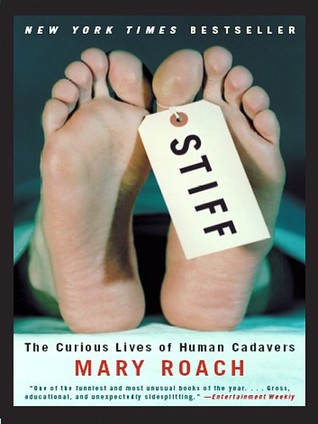
Stiff: The Curious Lives of Human Cadavers

2. Stiff: The Curious Lives of Human Cadavers by Mary Roach

So many people have recommended Mary Roach to me. Not just Stiff but some of her other works as well: Bonk, Gulp, or Spook. She’s a reputedly amazing non-fiction writer who turns her well-researched interests into fascinating reads. I definitely want to tackle at least one of Roach’s books but other things always seem to slip past her on the TBR list.

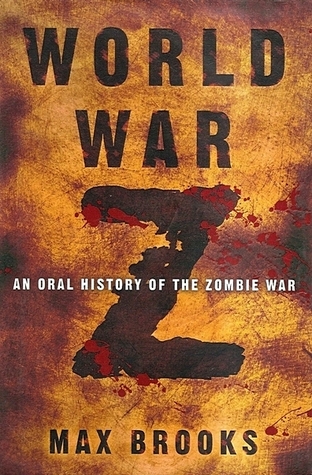
World War Z: An Oral History of the Zombie War

3. World War Z by Max Brooks

I know for a fact that this novel has appeared in at least one of my TBR posts for Top Ten Tuesday in the past two years. And I genuinely mean to read the darn thing! It always seems like the time is never right. I have a painfully vivid imagination and I had to stop watching “The Walking Dead” because it was giving me nightmares. So I anticipate another round of that with World War Z. Tons of friends have read and loved this book, so I want to give it a chance. I’m just scared.

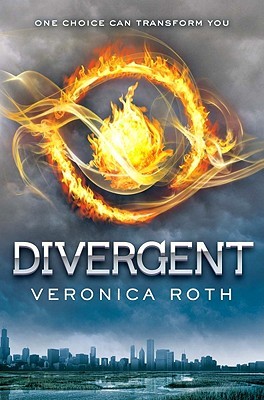
Divergent (Divergent, #1)

4. Divergent by Veronica Roth

I’m not a YA snob, per se, I’m just very picky about what I read in the YA genre. Mostly because there are so many adult fiction pieces that I’m dying to read that the YA gets put off till that ever-present “later.” That being said, there are too many of my friends who tell me I must read this book for me to be squirmy about it for much longer.

From Reverence to Rape: The Treatment of Women in the Movies

5. From Reverence to Rape by Molly Haskell

This book has been mentioned in every film course I took in graduate school. I NEED to read this book. For my academic life and because it sounds really interesting.

The Dream of Scipio

6. The Dream of Scipio by Iain Pears

My friend, Clara, handed this to me at our library’s annual book sale and said I needed to read this. Everything was $1.00, so I didn’t question her. It’s sitting on my shelf right now taunting me.

Lunch Poems

7. Lunch Poems by Frank O’Hara

One of my favorite professors in college loved Frank O’Hara. Not a class would go by without him telling us that we all needed to read Frank O’Hara. My apologies, Dr. Babbitt, but I still need to read Frank O’Hara.

The Poisonwood Bible

8. The Poisonwood Bible by Barbara Kingsolver

This is probably the only book on my list that I have no interest in reading but that everyone seems to recommend. I’ve picked it up at the library dozens of times but the synopsis always turns me off. People can tell me I need to read this book all they like, I don’t WANT to read it.

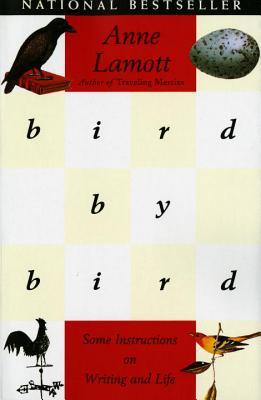
Bird by Bird: Some Instructions on Writing and Life

9. Bird by Bird by Anne Lamott

It seems like all the writers I know swear by this book, or at least respect it. Bird by Bird has served as many a muse and validation for my writer friends, and who doesn’t want a little bit of that in their life? I just haven’t gotten around to picking it up for myself.

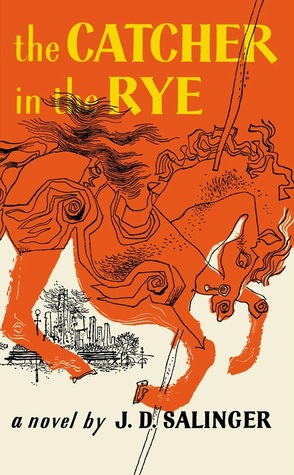
The Catcher in the Rye

10. The Catcher in the Rye by J.D. Salinger

Somehow I escaped reading this in high school and college. Not a clue how I managed that, but it seems to shock most people that I was never required to read any Salinger. Then these same people tell me I need to read it because it was really quite good. Honestly, I’d like to read it because I think I’ll understand more allusions to things in pop culture. Sometimes that’s reason enough.


So who has read what? Tell me in the comments below. Your words might just be the ones that push me over the edge on reading one of these bad boys!

Archetype Almost Breaks the Mold

When I first picked this novel up it was all about the cover. I was at LAX and the bright blue and red color blocking just called to me. And the back jacket did it’s job of intriguing me with story.  A few weeks later I picked up the book to actually read it and not just be a pretty face on my book shelf.

Archetype: A Novel (Archetype, #1)

Image respectfully borrowed from Goodreads

So after some frantic page turning and late nights here is my review of M.D. Waters’ Archetype.

Emma has lost her memory in some kind of freak accident. All she knows is that she wants to please her husband, Declan, and that she has an inner voice that tells her everything is not what it seems. Guided by that pesky inner voice–who seems separate from herself–Emma begins to remember fragments of an extremely different life with an extremely different man, the angry and enigmatic Noah. Set in a future where fertile women are a commodity, Emma must figure out which future she wants to live out–her present as an adoring wife or her past as a member of the rebellion.

That is an abbreviated summary to say the least, but I’m trying not to spoil everything in this review. Part of the fun of reading this novel is figuring out the details with Emma. I’ll get into some major spoilers down below, but I also wanted there to be enough info for you if you were trying to avoid the spoilers.

The book’s back cover quote references Archetype as a kind of heir to The Handmaid’s Tale, and while I can see the parallels I don’t necessarily agree. They’re in the same genre, certainly. But Archetype is more Alias-esque than Ofred-esque. Which is still a great middle ground for the novel to occupy.

If you’re a fan of TV shows such as “Alias” or “Orphan Black” then I would definitely recommend Archetype. The pace of the novel is light and quick without lacking in substance. Episodic style chapters make the read easy but it’s also great for finding a stopping place if you want to draw out the reading experience. This would be such a great book for traveling. It’s not too long and you can devour it on the plane or at the beach.

If you’re looking for deep philosophical meaning in your sci-fi, this is not the book for you. Waters doesn’t explain the science and implications on humanity enough for that kind of reader to be satisfied. But if you’re looking for an enjoyable weekend read, give this book a shot.


*Spoiler Alert*
**Seriously, I’m about to discuss the ending right now**


My favorite thing about this novel is that we have a female character who falls in love and then leaves the guy(s) in the end for HER well being and happiness. For that reason alone I would recommend Archetype.It’s just something you don’t see that often in NA. Not that Emma doesn’t love Noah (or Declan). There is definitely a love story there, but Emma leaves because she realizes how unhealthy staying is.

That said, I would be shocked if the second book, Prototype, wasn’t about Emma struggling to get back to Noah and prove to him that she’s still the same woman he married in spite of being a clone. And I’d still like to read that story. But I am thrilled that Waters did not wrap her novel up in a prepackaged bow.

I’m not going to do Emma Wade the disservice of labeling her a strong female character because that phrase gets thrown around far too much for it to have meaning. Emma has moments of weakness and willfully lives in denial for a large chunk of the book, but these flaws take the story to some really interesting places. Her denial also makes Emma more realistic as a character.

I liked this book but my personal rating system has been revolving around whether or not I would physically keep the book. Storage in my life right now is at such a premium. The potential to re-read is also a strong factor. So I enjoyed Archetype and would love to read its sequel, but I think this one may get passed on to a friend or the local used bookstore. The only thing that might sway me is the cover. I might keep this book for the cover because I love the graphics so much.

Anyone else read Archetype? Tell me what you think in the comments!